Do-it-yourself game plans · No. 05 / 22
Stage 1: How do you define the commercial problem?
Last updated
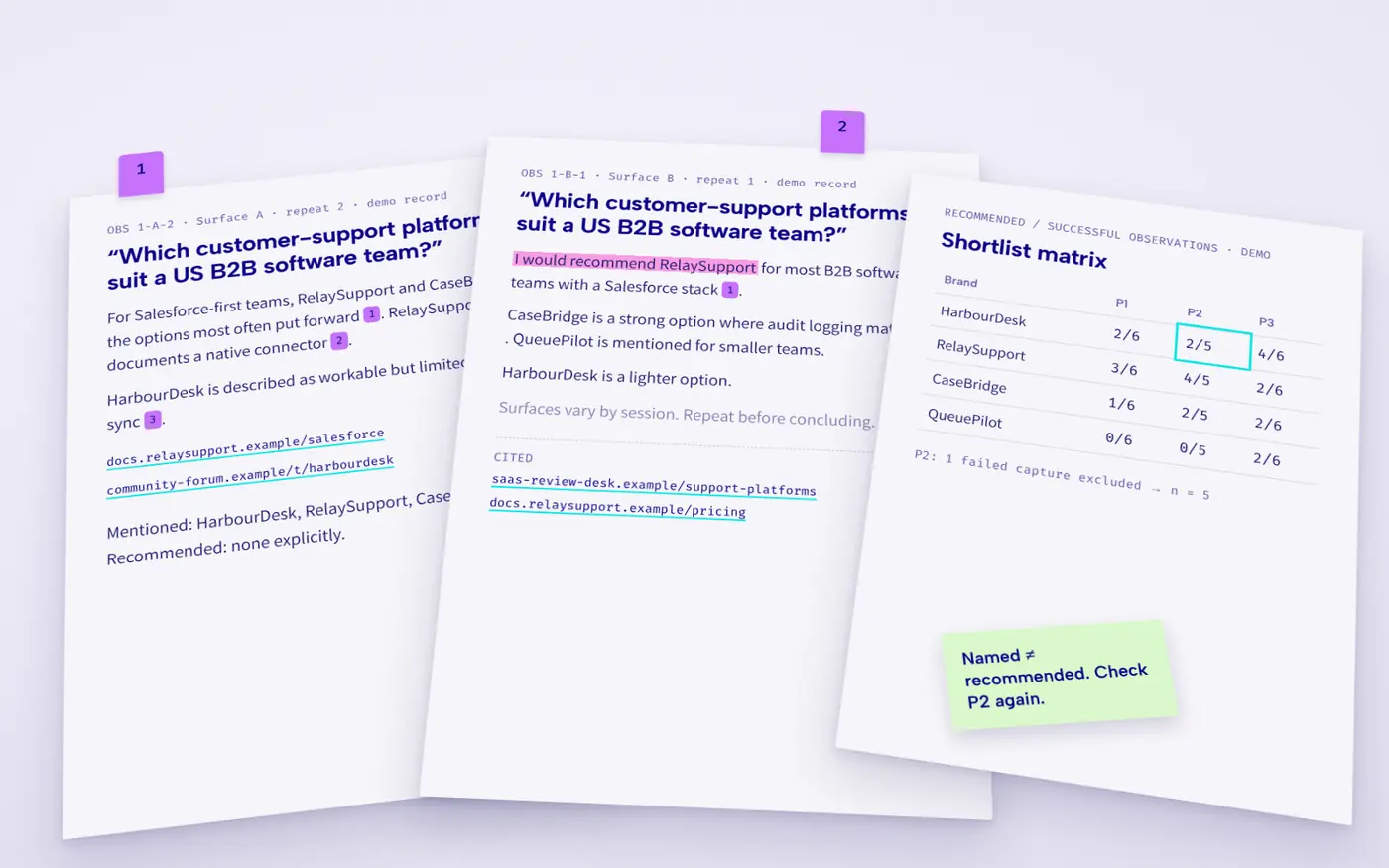
Write a one-page charter before choosing a tool. This prevents the programme from expanding into whatever a dashboard happens to measure.
Use this template:
| Charter field | What to write |
|---|---|
| Target buyer | A specific role, organisation type, country and use case |
| Purchase decision | The category or shortlist decision you want to understand |
| Trigger | The observed answer, customer comment or upcoming business decision |
| Commercial hypothesis | Why the suspected gap could matter to consideration or accurate evaluation |
| Baseline scope | Prompt families, surfaces, country/language settings, competitors and repetitions |
| Implementation scope | What your team is actually authorised and resourced to change |
| Success evidence | Required operational improvements and the visibility patterns worth investigating |
| Guardrails | Accuracy, privacy, collection permissions and ordinary SEO performance |
| Budget and stop date | Internal hours, external spending cap and review date |
| Owner | One accountable decision-maker |
Illustrative hypothesis: “US operations leaders evaluating software with Salesforce integration may repeatedly overlook us because our integration scope and implementation requirements are poorly documented.”
That is a hypothesis—not a finding. Your evidence may instead reveal weak product fit, a sampling artefact or an access problem.
What should you exclude?
For the first pilot, exclude:
- Additional countries without a distinct buying case.
- Thousands of generated prompts with no customer provenance.
- New domains or a site migration solely for this experiment.
- Major rebranding.
- Revenue-loss estimates inferred from missing mentions.
- Paid placement or advertising results mixed into organic recommendation scores.
Record exclusions so later stakeholders do not mistake a deliberately narrow test for a comprehensive market assessment.