
 No. 01 / 25What should buyers ask AI search visibility experts?Ask experts to connect an observed visibility gap to a defensible purchasing decision—not merely explain how to increase a dashboard score. This…Read article →
 No. 02 / 25Which experts should we approach—and why?The suggested panel combines measurement sceptics, technical practitioners, commercial operators and a platform perspective. The question assignments…Read article →
 No. 03 / 25What has changed that makes these interviews timely?First party reporting now deserves a more prominent place in the procurement conversation. Google’s current documentation says its dedicated…Read article →
 No. 04 / 251. Why does ChatGPT recommend our competitor but not us—and when should we care?Start by testing whether the omission recurs in a buying situation the company can legitimately serve. A competitor screenshot should initiate an…Read article →
 No. 05 / 252. What prompts should we track for AI search visibility?Demand a documented buying question library, not an unexplained list generated by the monitoring tool. Put to: Aleyda Solís, with an in house demand…Read article →
- No. 06 / 253. How many prompts and repeated runs are enough to distinguish visibility lift from sampling noise?There should be no universal sample size answer without specifying the quantity being estimated and the decision it must support. Put to: Rand…Read article →
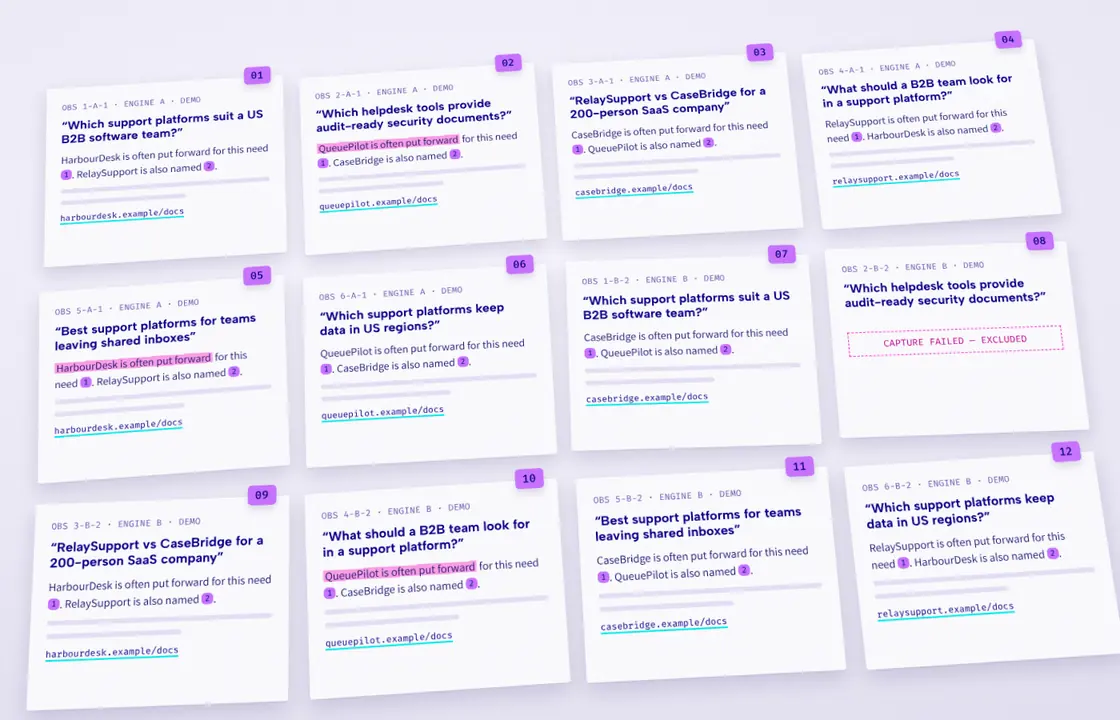
 No. 07 / 254. What exactly counts as a mention, citation or recommendation?Make the scoring rules auditable before discussing an overall AI visibility score. Put to: Patrick Stox, Lily Ray and Mike King. Why it matters to…Read article →
 No. 08 / 255. Are we measuring the consumer experience or an API approximation?Require the exact collection surface and configuration; an engine name is insufficient. Put to: Mike King and Patrick Stox, with each shortlisted…Read article →
 No. 09 / 256. What do Google and Bing’s first-party AI reports replace—and what still needs paid monitoring?Use platform reports to answer platform specific questions, then identify the remaining measurement gap. Put to: Krishna Madhavan and Aleyda Solís…Read article →
 No. 10 / 257. Is our problem technical access, weak information or lack of relevant external evidence?Ask for a diagnostic sequence before commissioning content production. Put to: Mike King and Patrick Stox. Why it matters to buyers: Google states…Read article →
 No. 11 / 258. What GEO work is genuinely additional to our existing SEO programme?Ask for incremental deliverables, not a new label for the same work. Put to: Mike King and Lily Ray. Why it matters to buyers: Google’s current…Read article →
 No. 12 / 259. Do SaaS review sites and digital PR improve AI recommendations—or merely appear alongside them?Treat a competitor citation map as an investigation tool, not proof of an influence mechanism. Put to: Aleyda Solís and James Crawford. Why it…Read article →
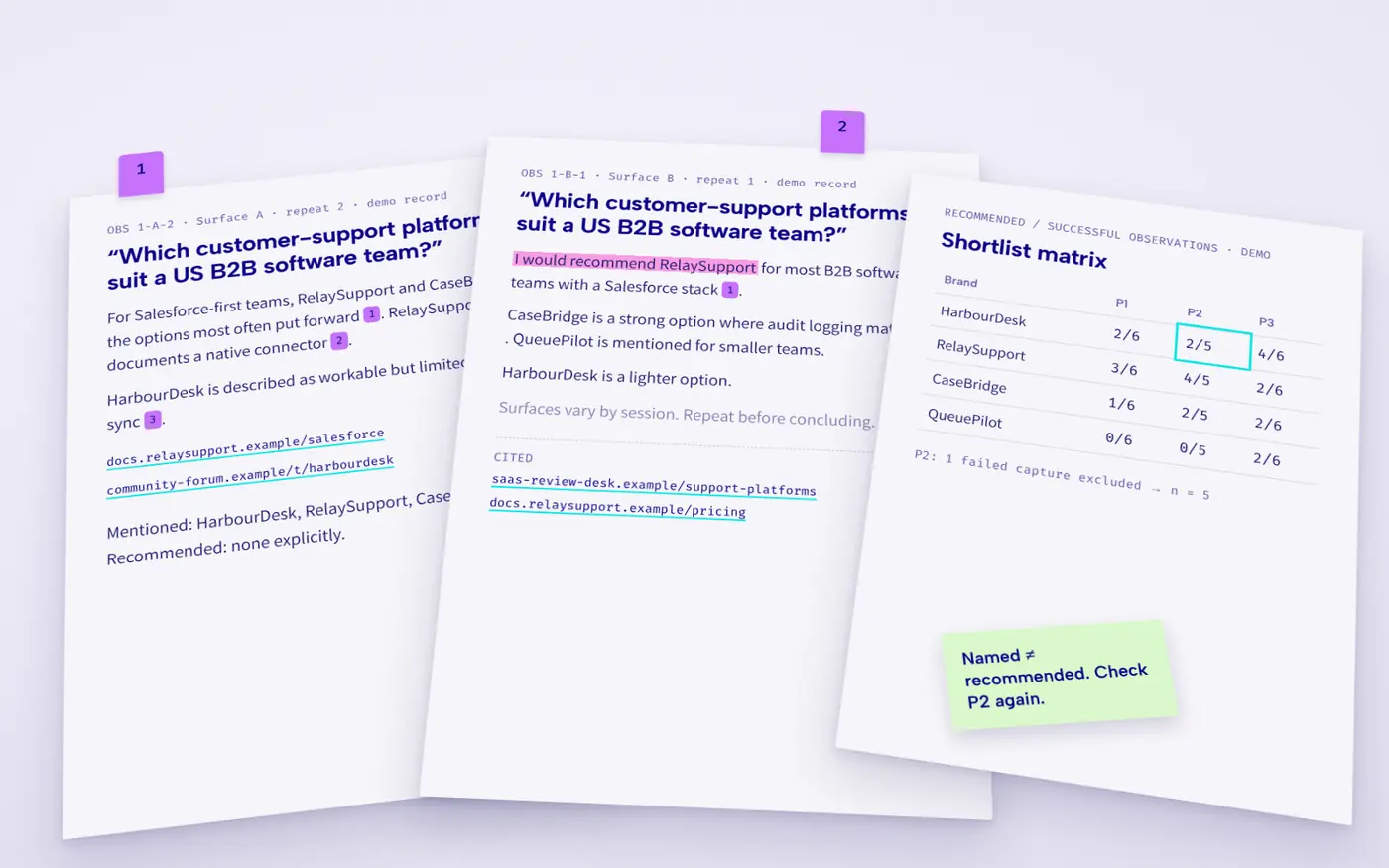 No. 13 / 2510. What would convince you that an agency caused the reported visibility improvement?A credible case study should explain alternative explanations, not simply show before and after screenshots. Put to: Mike King, Rand Fishkin and an…Read article →
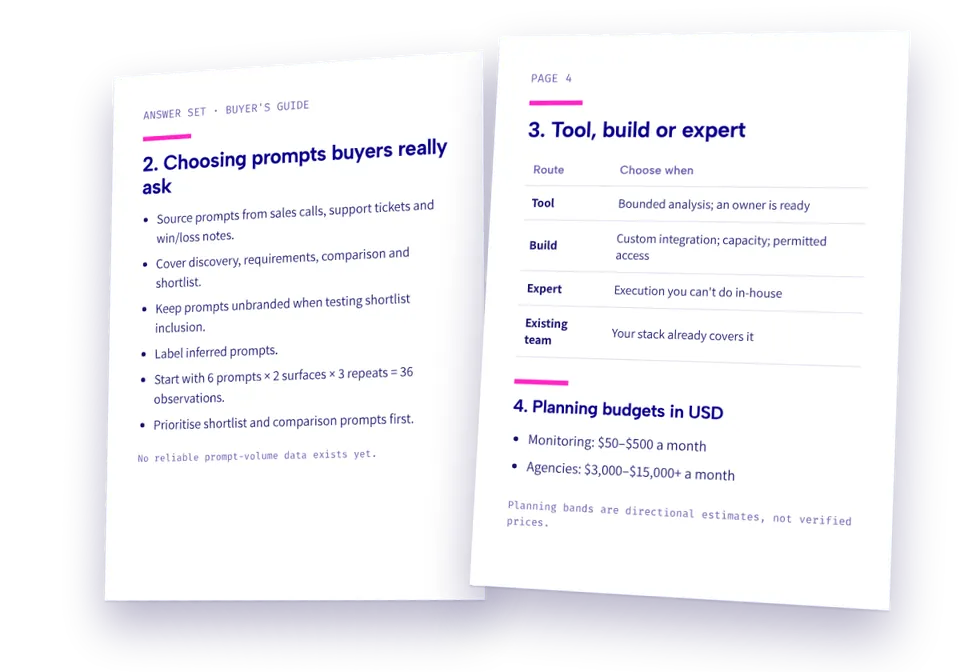 No. 14 / 2511. How should we connect AI search visibility to qualified pipeline without inventing attribution?Use a chain of evidence, with explicit limits at every step. Put to: Wil Reynolds and James Crawford. Why it matters to buyers: AMEC’s practitioner…Read article →
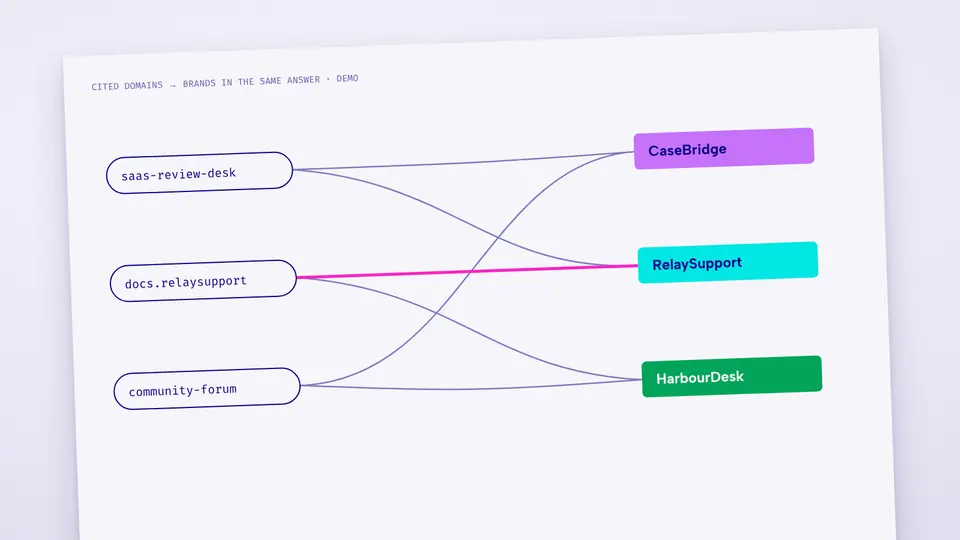 No. 15 / 2512. What should we do when an assistant gets our pricing, integrations or security claims wrong?Treat factual accuracy as its own workstream, with accountable review and correction. Put to: Lily Ray, with the buyer’s product marketing and…Read article →
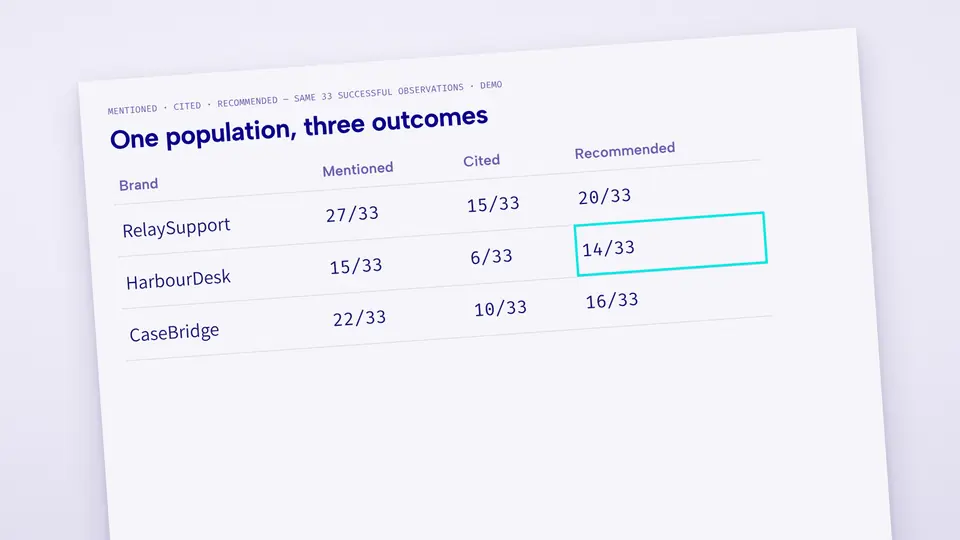 No. 16 / 2513. How should we compare AI visibility software without comparing incompatible scores?Run a buyer owned acceptance test before choosing a dashboard. Put to: Patrick Stox and the technical leads of shortlisted vendors. Why it matters to…Read article →
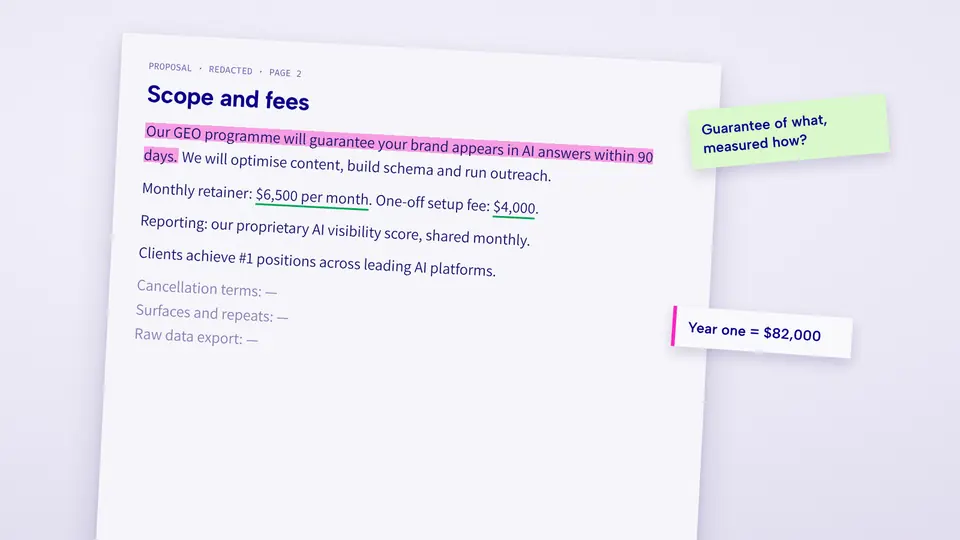 No. 17 / 2514. What should a bounded GEO pilot cost—and what should its scope exclude?Ask the expert to price a decision ready scope, not quote a supposedly universal monthly retainer. Put to: Wil Reynolds, with procurement and the…Read article →
 No. 18 / 2515. Which AI-visibility tactics create unacceptable advertising or reputation risk?Require explicit boundaries around reviews, endorsements and purportedly independent coverage. Put to: Lily Ray and James Crawford, followed by…Read article →
- No. 19 / 2516. What data and platform-access risks are we accepting when we buy monitoring?Evaluate the full collection and data processing chain, not just the dashboard’s security badge. Put to: supplier technical leadership, procurement…Read article →
- No. 20 / 2517. Who owns implementation when the findings cross SEO, content, product marketing and PR?Do not buy recurring diagnosis without a route to implementation. Put to: Wil Reynolds and Aleyda Solís, alongside an in house marketing owner. Why…Read article →
- No. 21 / 2518. What evidence would make you stop, reduce or refuse to renew an AI-visibility programme?Require a credible stopping rule before asking for a growth plan. Put to: Rand Fishkin, Wil Reynolds and the buyer’s CMO. Why it matters to buyers…Read article →
- No. 22 / 25What should we send experts before the interview?Send a compact evidence pack that makes generic answers difficult. The following is a proposed desk workflow, not an established industry standard…Read article →
- No. 23 / 25How should we judge the expert answers?Reward specificity, transparent uncertainty and decision usefulness—not confidence or presentation polish.Read article →
- No. 24 / 25What is the buying decision these interviews should support?The desk’s proposed decision sequence is: 1. Validate the problem: does the omission or inaccuracy recur in a relevant test? 2. Validate the…Read article →
- No. 25 / 25SourcesPrimary documentation, original practitioner research and professional guidance are listed below. Supplier materials establish what their authors…Read article →