Readiness quiz · No. 04 / 13
Section 2: Can you trust the AI visibility measurement?
Last updated
4. Do you know exactly which experience is being measured?
Evidence to locate: A measurement specification—not just a list of platform logos.
This context matters: OpenAI documents that network location and saved location information can affect ChatGPT search results. Do not assume that adding “US” to a prompt fully controls the experience. (help.openai.com)
5. Can you inspect the answers behind the score?
Evidence to locate: An answer-level export and written classification rules.
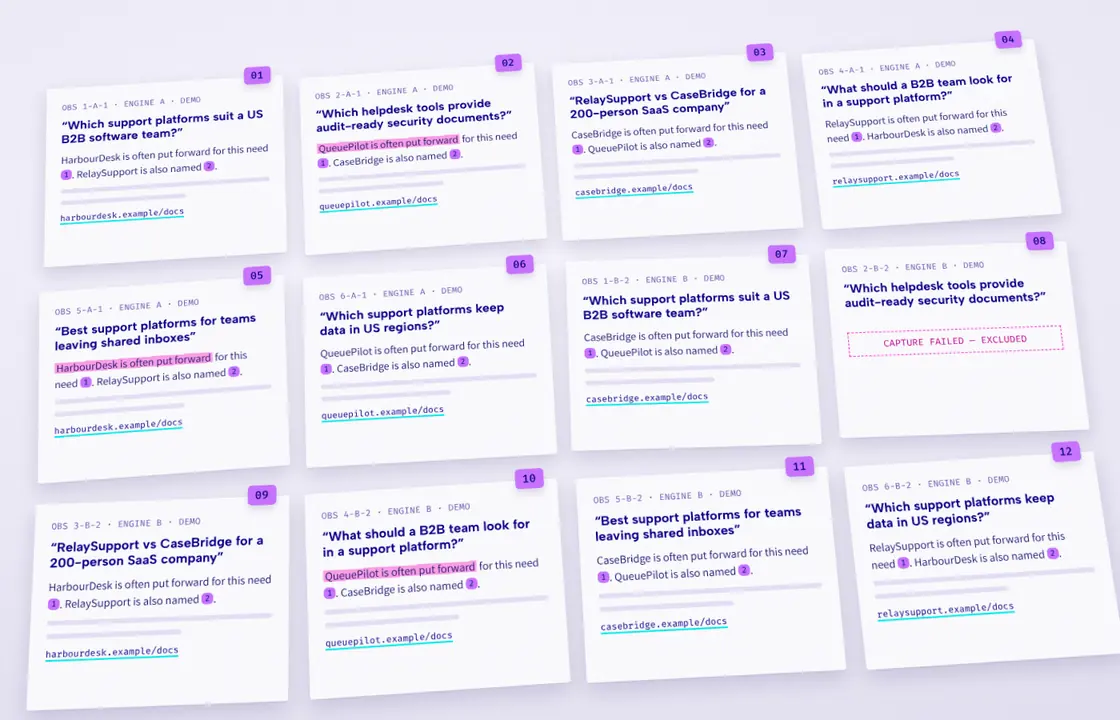
Required distinction in this rubric: A failed collection is unknown. A successfully captured answer without your brand is an observed absence. A Google result without an AI Overview is a separate feature-availability outcome—not a failed collection.
6. Have you tested repeatability before interpreting change?
Evidence to locate: A dated baseline, repeat-observation results and a methodology-change log.
Published studies measure different things. SparkToro/Gumshoe’s work found substantial variation in recommendation lists, while Analyze AI’s B2B study reported persistence for individual brand–prompt observations. Neither commercially affiliated study establishes a universal volatility rate for your category; changing lists and persistent individual brands are not mutually exclusive findings. (sparktoro.com)
Section 2 score: 0 / 9 (0 of 3 answered)
Section 2 done? Carry on.
Your answers stay in this browser tab only and are never sent to us.
Sources cited on this page
- help.openai.com help.openai.com/en/articles/9237897-chatgpt-search
- sparktoro.com sparktoro.com/blog/new-research-ais-are-highly-inconsistent-when-recommending-br